Friday, August 31, 2007

Claudia Roden

Claudia Roden is the subject of Jane Kramer's wonderful profile in this week's food-themed New Yorker. Roden is an expert in many cuisines and her cookbooks are essentially fail-proof. I use her Book of Middle Eastern Food all the time, as well as the encyclopedic Book of Jewish Food. The latter covers both Ashkenazic and Sephardic cuisine in detail, and is also a wonderful history of Jewish cultures from around the world. Her most recent book, Arabesque, is gorgeous and is a new addition to the Library's collection.

My favorite Roden recipe comes from the Book of Middle Eastern Food, and it couldn't be simpler to make. It's a classic Turkish egg dish called Cilbir. I found a beautiful photograph (and nearly identical recipe) of the dish at Almost Turkish - a food blog of Turkish cuisine.

Cilbir - Turkish Poached Eggs with Yogurt
(adapted from A Book of Middle Eastern Food)
6 eggs
1T. vinegar
Salt
1 1/4 - 2 c. yogurt
4T. butter
1T. paprika

Use fresh eggs. Poach them in the usual way. A good method for poaching eggs is to dip them, still in their shells, in boiling water for a few seconds so as to set a thin layer of the white nearest the shell. This will prevent the egg white from spreading too much. Break each egg into a cup and slide into another pan of boiling water to which a tablespoon of vinegar and some salt have been added. Remove the pan from the heat and leave it, covered, for 4 minutes. Then remove the eggs with a perforated spoon. Do not attempt to poach more than 2 eggs at a time.
Arrange the poached eggs on a hot serving dish.
Beat the yogurt with salt (I add a clove or two of minced garlic as well -RF) and pour some over each egg. Melt the butter and stir in the paprika. Dribble over the yogurt and serve.

Thursday, August 30, 2007

The Brooklyn

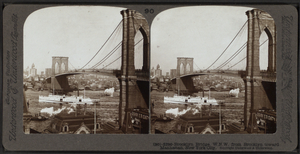
Brooklyn Bridge, W.N.W. [west-... Digital ID: G91F173_160F. New York Public Library

It's been a while since I posted any cocktail recipes, but since Frank Bruni just gave two stars to one of my favorite restaurants, I thought I'd honor Franny's by posting a recipe for a Brooklyn. They serve a delicious one at Franny's, so my brother reverse engineered the recipe to make an equally delicious one at home. Like many cocktails, recipes vary. The Official Mixer's Manual recipe (1934) uses rye and dry vermouth. But I can't vouch for that recipe. I can vouch for this.

The Brooklyn
2 oz. bourbon (We use Maker's Mark, or go to LeNell's for something unique.)
3/4 oz. lemon sour (recipe below)
3/4 oz. sweet vermouth (Martini & Rossi)
Shake ingredients w/ ice in a cocktail shaker and strain into tumbler with a few ice cubes. Top with pinch of lemon zest. Or serve up in a cocktail glass. Maraschino cherry optional.

Lemon Sour: Heat sugar and water in a 2:1 ratio until the sugar has dissolved. Take off heat and allow to cool. Mix with equal amount of lemon juice. Pour into jar and chill in fridge. It keeps for a while, and is great in a variety of drinks.

Wednesday, August 22, 2007

Cookbook Stores

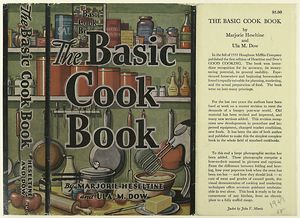
The Basic Cookbook, by Marjori... Digital ID: 490212. New York Public Library

According to a short piece in Publisher's Weekly, two new cookbook stores have opened on the East Coast. In Boston, chef Barbara Lynch has opened Stir, which features titles in cookery, wine, culinary history and food science. In addition to the bookstore, Stir also offers classes in their demonstration kitchen. Some of the September class listings include: Oysters and Wine, and the Cocktail Meets Plum.

In Portland, Maine, Don Lindgren and Samantha Hoyt Lindgren have opened Rabelais. The store features a wide variety of culinary texts including rare and out-of-print works, new cookbooks, and prints and photographs. Don was a rare book dealer for many years, and his wife Samantha worked as a photo editor and pastry chef in New York and Maine. Their website features detailed book listings and a wonderful blog.

In New York, Kitchen Arts and Letters reigns supreme. They have everything from brand new releases, to foreign titles and esoteric works. You won't be able to leave without buying something. And if buying is not your thing, there is always the Library....

Friday, August 17, 2007

Julia Child


Although I'm not one to read too much into coincidence, I would like to point out that Julia Child and I share a birthday: August 15th. So while I was chowing down on hamburgers and buffalo wings, Julia, no doubt, was eating Dover sole in culinary heaven shaking her head at my American ways.

The Library has a large collection of Julia's works, both by and about her, including the very recent biography Julia Child by culinary historian Laura Shapiro. The two-volume set of Mastering the Art of French Cooking (first editions, no less) are available along the shelves in the Main Reading Room, side-by-side with Julia's tome The Way to Cook. My Life in France, Julia's collaboration with her nephew Alex Prud'homme, is also in the stacks and, in my humble (Leo) opinion, is one of the most enjoyable reads of the past few years.

Although the Library doesn't have the DVD set of PBS series The French Chef, a rental is highly recommended. You may not be able to watch all episodes in one sitting, but "The Omelet Show" is worth multiple viewings alone.

There are also some wonderful websites devoted to her life and kitchen, with especially moving tributes following her death in 2004. The Schlesinger Library in Cambridge is the proud holder of her papers, as well as Child's cookbook collection which she donated to the Schlesinger in 1990. In addition to Julia's papers, they also house the papers of Simone Beck and Avis De Voto, who was instrumental in getting Mastering published.

And finally, the Library will have a special event on October 10th called Julia Child in America. The panel will include Molly O'Neill, Dan Barber, Laura Shapiro, and David Kamp. Moderated by Melanie Rehak. Tickets are 15 dollars.

Bon Appetit!

Wednesday, August 8, 2007

Desert Island Cookbook

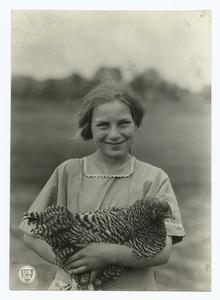
A Member of the Poultry Club. Digital ID: 92240. New York Public Library

Andrea Buman
Mother/Photo Editor
New York, NY

Cookbook: Tender at the Bone by Ruth Reichl

Why do you like it?: It's not only a memoir, it also includes her favorite recipes from important times in her life. Ms. Reichl is an amazing story teller and she knows a thing or two about food. The recipe for fried chicken is worth the long prep time.

Favorite Recipe:
Claritha's Fried Chicken

2 1/2 to 3lb chicken, cut up
Salt
3 cups buttermilk
2 onions, sliced thin
1 cup flour
3 teaspoons kosher salt
1/2 teaspoon cayenne pepper
1 teaspoon cracked black peppercorns
1 cup vegetable shortening
1/4 cup butter

Put chicken pieces in bowl and cover with salt. Let sit for 2 hours.
Remove chicken from salt, wash well, and put into a bowl with buttermilk and sliced onions. Cover and refrigerate overnight.
Place flour, salt, cayenne, and black pepper in a paper bag and shake to combine. Drain chicken one piece at a time and put in bag. Shake to coat thoroughly. Place on waxed paper. Repeat until all chicken pieces are coated.
Leave for 1/2 hour to dry out and come to room temperature.
Melt shortening and butter in large skillet over high heat, add chicken pieces, and cover pan. Lower heat and cook 10 minutes. Turn and cook, uncovered, 8 minutes for breasts, 12 minutes for dark meat.
Test for doneness by piercing thigh; juices should run clear.
Serves 4

Saturday, August 4, 2007

Mustard

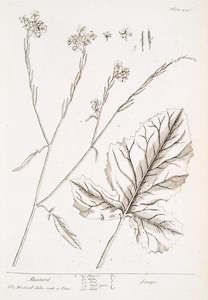
Mustard. Digital ID: 1126165. New York Public Library
French's Yellow or Meaux Pommery, I love mustard and am always looking for ways to incorporate it into recipes. The other morning, as I was browsing through the Librarians' Internet Index (LII), I came across some websites devoted to this superior condiment. The website for the Napa Valley Mustard Festival includes some winning recipes from the World Wide Mustard Competition, including a Raviolini in a Light Dijon Cream Sauce from Derek De le Paz of the Napa Valley Grille. It sounds a bit more complicated than Patricia Wells' wonderful Penne with Mustard and Chives from The Paris Cookbook, but I'm willing to give it a try.

Other mustard listings on the LII, include the Mustard Museum in Mount Horab, Wisconsin. Their site not only features mustard recipes, and also boasts their second annual mustard-themed romance writing contest called Seeds of Passion.

As for the Library, we have some wonderful mustard cookbooks in the stacks. One, simply called The Mustard Book, is organized by geographic origin: American mustard, Pacific Rim and European. Recipes include, Fennel Sauteed with Garlic in Mustard Cream Sauce and Coconut Cream with Rum Mustard. Suzanne Goin's Sunday Suppers at Lucques is an all-around amazing cookbook, and has quite a few delicious recipes using mustard in creative ways. For those interested in making their own mustard, we have Mustard: Making Your Own Gourmet Mustards, by Janet Hazen. Her recipe for champagne mustard sounds particularly appealing.

Champagne Mustard
(adapted from Mustard by Janet Hazen)

1/4c. whole yellow mustard seeds, finely ground
3/4c. mustard powder
2T. light brown sugar
3/4c. champagne or sparkling wine
1/2t. each, dried tarragon, basil and thyme
1 clove garlic, minced
1t. salt

In a small bowl, combine mustard seeds and powder. Add the sugar, champagne, herbs, garlic, and salt; mix well. Transfer to a clean, dry jar or bowl, cover tightly, and refridgerate for 2 weeks before using.

Friday, August 3, 2007

Visiting the Library

New York Public Library Centra... Digital ID: 1153340. New York Public Library

I've had many questions from friends and readers about visiting and doing research at the New York Public Library. I admit, the Library can be an intimidating place to those unfamiliar with its procedures, but once you figure it all out you'll be rewarded with wonderful collections and a beautiful space to work.

The collections I work with are at the Humanities and Social Sciences Library, the "one with the lions." This library is one of the four research libraries of the NYPL system and we use a catalog called CATNYP. No materials within the research collections are circulating. You can't take them home. Ever.

To request materials in the research libraries you must get an Access Card. The Access Card will give you access to all the collections, except those within the Special Collections, and will also allow you to make one 45 minute Internet reservation a day. One piece of advice: fill out the Access card application BEFORE you come to the Library. It speeds up the process. The card pick-up is on the 3rd floor in the Rose Main Reading Room.

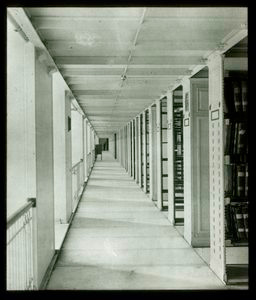
To find out what books and materials we have in the research libraries, browse through CATNYP, because you can't browse through the stacks. Yes, we're a closed stack library. To request a specific book, you fill out a call slip when you arrive at the Library. We will fetch the book for you and bring it to you in the reading room. The exceptions are the books on the open shelves of the Reading Room which are available for browsing. They include many ready reference books and general works. If you are requesting materials in any of the smaller collections, such as Asian and Middle Eastern, Slavic and Baltic, Maps, and the Jewish Division, you should submit your call slips within that division.

For general cookbooks, use Cookery as one of the keywords in CATNYP, as it will yield more relevant results. Most cookery-related and culinary history materials are available in the General Research Division (rm 315).

The Buttolph Historic Restaurant Menu Collection is housed in Rare Books, and requires 24 hour notice as well as a card of admission to Special Collections. You can get that card in room 316 (where you can also see the Gutenberg Bible). The holdings of the Collection are available through the Menu Collection Database.

It all comes together eventually, but yes, it can be time-consuming and often confusing. If you want to do research at the Library you can always email me, or leave a comment, and I'll try to steer you in the right direction.